Defining Digital Intelligence
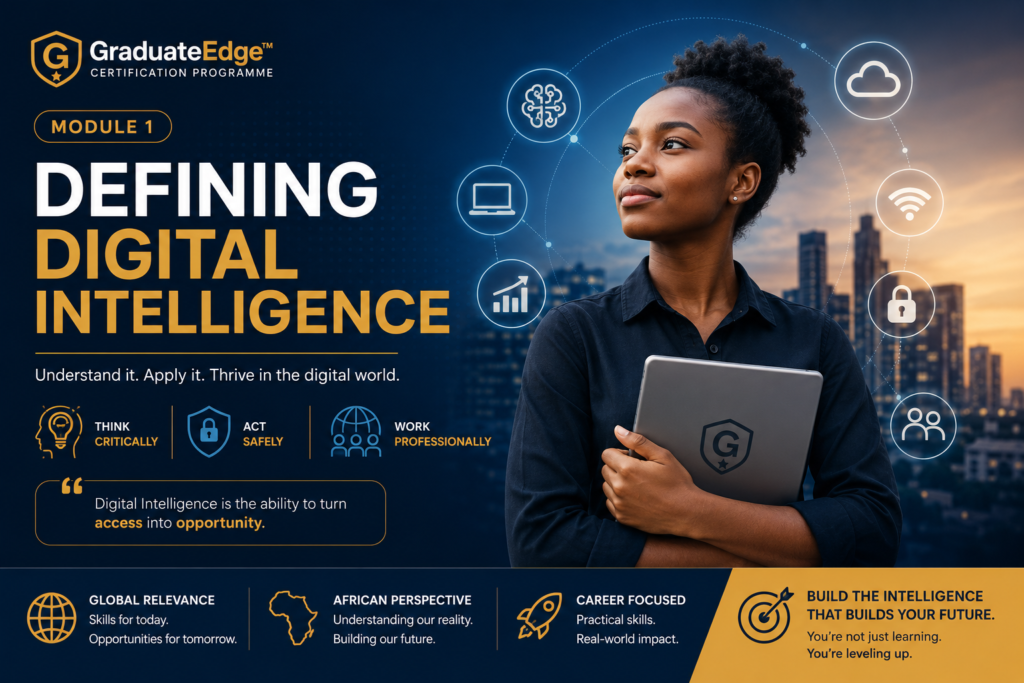
🧠 Defining Digital Intelligence
Let’s start with a question most people never ask:
What’s the difference between someone who uses
technology and someone who is digitally intelligent?
The answer changes everything.
━━━━━━━━━━━━━━━━━━━━━━━━━━━━━━━━━━
- Beyond Basic Digital Skills
Almost everyone today uses technology.
Billions of people scroll social media,
send messages, and stream content daily.
But using technology casually is not the
same as being digitally intelligent.
Digital Intelligence is defined as:
“The combination of technical skills,
cognitive capabilities, and behavioural
competencies that enable an individual
to thrive in digital environments —
professionally, safely, and responsibly.”
It is not about what devices you own.
It is not about how many apps you use.
It is about HOW you engage with the
digital world — with purpose, judgment,
and professional awareness.
━━━━━━━━━━━━━━━━━━━━━━━━━━━━━━━━━━
- Where the Concept Comes From
The term Digital Intelligence was
popularised by the DQ Institute —
a global think tank working with
governments, corporations, and
universities in over 100 countries
to define digital competency standards
for the 21st century workforce.
Their research across 53 countries —
including Nigeria, Kenya, South Africa,
Ghana, and Rwanda — found that while
internet access was growing rapidly
across Africa and the developing world,
applied digital competency was not
keeping pace.
Access without intelligence creates risk.
Access with intelligence creates opportunity.
━━━━━━━━━━━━━━━━━━━━━━━━━━━━━━━━━━
- Digital Intelligence vs Digital Literacy
These two terms are often used
interchangeably — but they are different:
Digital Literacy:
The ability to use digital tools
and platforms to access, create,
and share information.
→ Knowing HOW to use technology.
Digital Intelligence:
The ability to apply digital skills
with judgment, safety, and professional
awareness across complex real-world contexts.
→ Knowing WHEN, WHY, and HOW WELL
to use technology.
Think of it this way:
Digital Literacy is knowing how to drive.
Digital Intelligence is being a
great driver — aware of your environment,
making good decisions, keeping yourself
and others safe.
━━━━━━━━━━━━━━━━━━━━━━━━━━━━━━━━━━
- A Global and African Reality
Across the world — from London to Lagos,
Singapore to São Paulo, Nairobi to New York —
employers are reporting the same challenge:
Graduates arrive technically connected
but professionally unprepared for
digital work environments.
In Africa specifically, the digital
economy is growing at an extraordinary pace:
→ Africa had over 570 million internet
users as of 2024 — the fastest growing
internet population in the world
→ Mobile money transactions in Sub-Saharan
Africa exceeded $1 trillion annually
→ African tech startups raised record
funding — with fintech, edtech, and
healthtech leading the way
This growth is creating massive opportunity —
but only for professionals who can operate
effectively in digital environments.
The gap between digital access and
digital intelligence is where careers
are won and lost.
━━━━━━━━━━━━━━━━━━━━━━━━━━━━━━━━━━
⚡ Power Insight
Digital Intelligence is not a fixed trait
you either have or don’t have.
It is a set of skills, habits, and
behaviours that can be learned,
practised, and continuously developed.
Every lesson in this module builds
one piece of that capability.
By the end of Module 1 you will not
just understand Digital Intelligence —
you will have started building it.
━━━━━━━━━━━━━━━━━━━━━━━━━━━━━━━━━━
✍️ Quick Action Challenge
⚡ Takes 3 minutes:
Think about your current digital habits.
Ask yourself honestly:
→ Do I use digital tools with purpose
or mostly out of habit?
→ Do I think about my online presence
professionally?
→ Do I know how to protect myself
and my data online?
No need to write anything down yet —
just sit with those questions.
We’ll come back to them at the end
of this lesson.
🚀 Want to go deeper?
Search “DQ Institute Digital Intelligence”
and spend 5 minutes exploring their
global research. You’ll see exactly
where the world stands on this.
━━━━━━━━━━━━━━━━━━━━━━━━━━━━━━━━━━
📚 Sources & Further Reading
- DQ Institute — Digital Intelligence
Framework and Global Standards (2024)
dqinstitute.org - GSMA — The Mobile Economy:
Sub-Saharan Africa Report (2024)
gsma.com/mobileeconomy - International Finance Corporation (IFC) —
Digital Skills in Sub-Saharan Africa (2023)
ifc.org - World Economic Forum —
Future of Jobs Report (2024)
weforum.org/publications/
the-future-of-jobs-report-2024 - Statista — Number of Internet Users
in Africa (2024)
statista.com - McKinsey Global Institute —
The Future of Work After COVID-19 (2021)
mckinsey.com/featured-insights/
future-of-work
━━━━━━━━━━━━━━━━━━━━━━━━━━━━━━━━━━
📌 Key Takeaway
Digital Intelligence is the difference
between someone who uses technology
and someone who leverages it.
In a world where your career, your
reputation, and your financial future
are increasingly lived online —
this distinction matters more
than ever before.